Napoleon's Fancy Forks and Your $0.50 Soda Can: Aluminum's Wild Ride Down the Price Chart
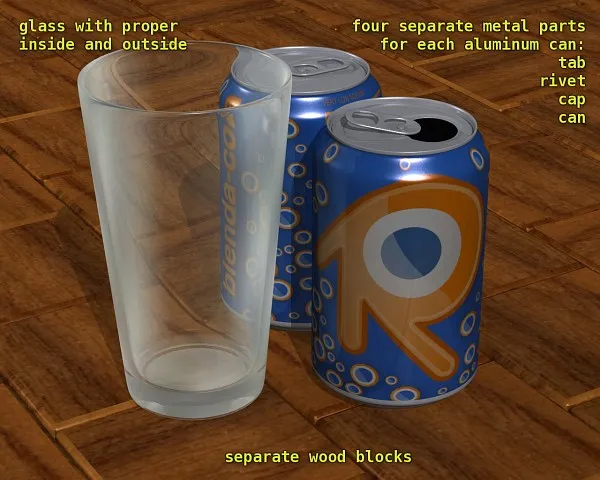
Photo: Halley at English Wikibooks, Public domain, via Wikimedia Commons
Picture the most expensive dinner party of the 1800s. Napoleon III, emperor of France, wants to impress his guests. And he does — but not with gold. The truly honored few at his table get forks and spoons made of aluminum. Everyone else? They eat with the boring old gold and silver stuff.
That's not a typo. In the 1850s and '60s, aluminum cost more per ounce than gold. Today, it's the metal of soda cans, lawn chairs, and foil you crumple up and throw away without a second thought. So what happened? Did aluminum get cheap, or did we get smarter?
A Metal Hiding in Plain Sight
Here's the kicker: aluminum is everywhere. It's the most abundant metal in Earth's crust — about 8% of it. Dig up a shovel full of dirt almost anywhere and you're holding aluminum compounds.
So why was it rarer than gold for most of the 19th century? Because abundance and availability are two very different things. Aluminum atoms cling to oxygen with a grip so strong that no furnace humans could build could pry them apart. Iron smelters, gold panners, copper refiners — all of them had it easy compared to anyone who dared try to isolate aluminum.
Early chemists had to resort to absurd measures. In the 1820s, Hans Christian Ørsted and Friedrich Wöhler managed to wring out small, impure blobs of the metal using potassium, itself fiendishly difficult to produce. Later, Napoleon III personally funded efforts to make aluminum industrially — dreaming of lightweight armor for his army — and got just enough to make cutlery and a few trinkets. The metal was literally displayed next to the crown jewels at the 1855 Paris Exposition.
Then two things happened within a few years of each other, and the bottom dropped out of the aluminum market.
1886: The Year Aluminum Got Cheap
In February 1886, a 22-year-old named Charles Martin Hall was running experiments in a woodshed behind his family's house in Oberlin, Ohio. Using a homemade battery and a trick of dissolving aluminum oxide in molten cryolite, he passed electricity through the mixture — and aluminum metal formed. He held up little metallic buttons in his palm. His sister Julia, also a chemist, was there to see it.
Meanwhile, across the Atlantic, a 23-year-old Frenchman named Paul Héroult patented essentially the same process. Neither man knew about the other. Both were in their early twenties. Both were essentially told the problem was unsolvable.
The Hall-Héroult process — still used today, essentially unchanged — does one elegant thing: it uses massive amounts of electricity to tear aluminum away from oxygen. Every aluminum smelter on Earth is, at its core, Hall's woodshed experiment scaled up to industrial absurdity. That's also why aluminum smelters get built next to cheap power: hydroelectric dams in the Pacific Northwest, geothermal plants in Iceland. When you recycle an aluminum can, you're saving about 95% of the energy it took to make it — which is why your curbside bin is quietly one of the most efficient energy programs in America.
By 1888, Hall had co-founded what became Alcoa. Aluminum prices collapsed — from $1,200 a kilogram in the 1850s to under a dollar within decades. The Washington Monument, completed in 1884, was capped with a pyramid of aluminum because it was the most precious metal anyone could think of. That same cap today is worth about as much as a nice sandwich.
The Lesson: 'Rare' Is Often Just 'Hard'
Aluminum's story isn't really about one metal. It's a story about what "rarity" even means.
For centuries, aluminum was rare because our technology couldn't reach it. The moment electricity became cheap and industrial, rarity evaporated practically overnight. The same pattern keeps repeating: lithium was a lab curiosity for a century before laptops and EVs made it a strategic resource. Rare earth elements sat in geochemistry footnotes until smartphones made them geopolitical chess pieces.
So the next time you crush a can and toss it in the recycling, give it a little respect. That material was once served to emperors. It took the stubbornness of a couple of twenty-somethings with homemade batteries to bring it to the rest of us.
And honestly, the can deserves it. It's lighter than it looks, endlessly recyclable, and it held your drink at 38 degrees. Napoleon would be jealous.