Carbon: The Element That Built the World and Then Started Burning It Down
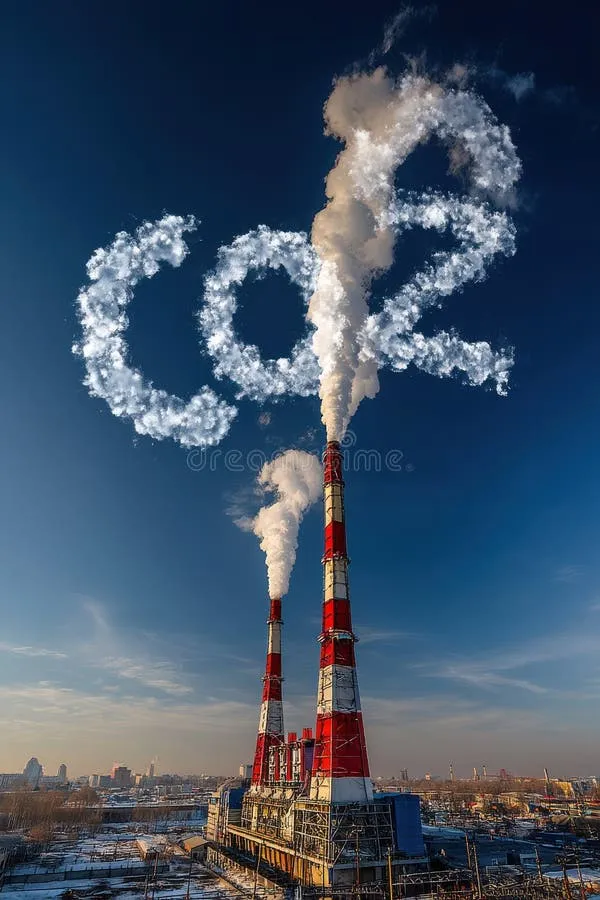
Photo: carbon dioxide industrial smokestacks climate science laboratory, via thumbs.dreamstime.com
If the periodic table were a TV drama, carbon would be the character you absolutely cannot look away from. Brilliant, essential, wildly versatile — and somehow also the reason everything is on fire. Element number 6 has been playing both hero and villain for millions of years, and right now, we're deep in the third act of a story we didn't fully understand until it was almost too late.
Let's talk about how one element got so complicated.
The Most Social Atom in the Universe
Carbon's secret power is its social life. It forms bonds — up to four of them simultaneously — with an almost reckless enthusiasm. That might sound like chemistry trivia, but it's the reason you exist. Every protein in your muscles, every strand of DNA in your cells, every fat molecule storing energy in your body: carbon is the thread running through all of it.
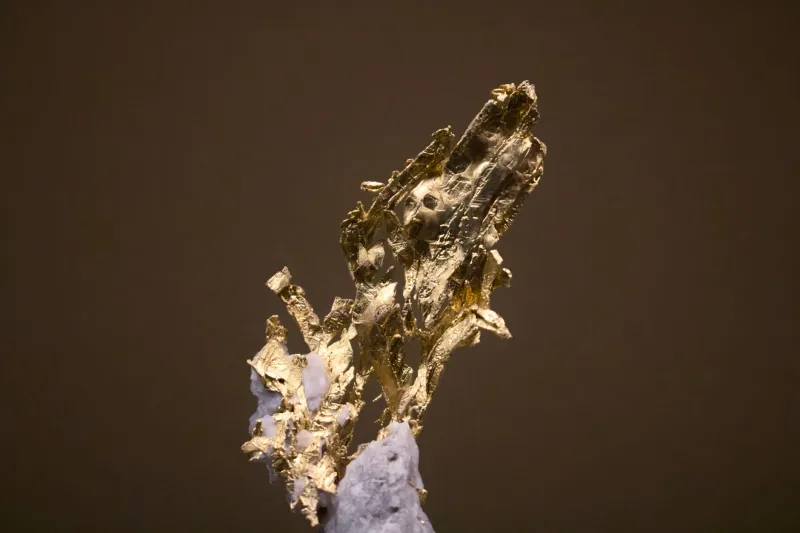
Here's what makes it genuinely strange: the same atom that builds a redwood tree also builds a diamond, a lump of coal, a sheet of graphene, and the graphite in your pencil. Carbon in different arrangements produces materials with almost nothing in common. Graphite is soft enough to leave marks on paper. Diamond is the hardest natural material on Earth. Both are pure carbon. The only difference is how the atoms are stacked.
Chemists call this allotropy, and carbon is basically the world champion of it. No other element wears so many completely different faces.
From Campfire to Climate Crisis
For most of human history, carbon cycling was a balanced act. Plants pulled carbon dioxide out of the air. Animals ate plants. Things died and decomposed. Carbon moved around, but the atmosphere stayed relatively stable. It was a slow, elegant loop that took millions of years to fine-tune.
Then we discovered that ancient, compressed carbon — coal, oil, natural gas — could be burned for energy. And we burned it. A lot of it. The Industrial Revolution wasn't just an economic shift; it was a geochemical one. We started pulling carbon that had been locked underground for hundreds of millions of years and releasing it into the atmosphere in decades.
The math is brutal: the atmosphere currently holds over 420 parts per million of CO₂, the highest concentration in at least 800,000 years. That extra carbon traps heat. Trapped heat changes weather patterns. Changed weather patterns threaten food systems, coastlines, and ecosystems. The element that made civilization possible is now destabilizing the conditions that made civilization possible.
Carbon didn't betray us. We just broke the cycle.
Plastic: The Twist Nobody Saw Coming
If CO₂ is carbon's dramatic villain arc, plastic is its slow-burn subplot. Starting in the mid-20th century, we figured out how to weave carbon atoms into long, durable polymer chains that could be molded into almost anything. Plastic was miraculous. Cheap, lightweight, sterile, flexible — it transformed medicine, food safety, manufacturing, and daily life.
The problem is that those durable polymer chains don't break down. A plastic bottle tossed in a landfill in 1975 is still essentially a plastic bottle. Microplastics — tiny fragments from degrading plastic — have now turned up in human blood, in Arctic ice, in the deepest ocean trenches. We built a civilization on a material that outlasts us by centuries, and we treated it as disposable.
Plastic is carbon, weaponized against the very biological systems that carbon originally built.
What Chemistry Is Actually Doing About This
Here's where the story gets genuinely interesting, because the same scientific ingenuity that created these problems is now sprinting toward solutions — and chemistry is leading the charge.
Carbon capture and storage (CCS) is one of the most discussed approaches. The basic idea: intercept CO₂ emissions at the source (power plants, factories) or pull them directly from the air, then store them underground or convert them into something useful. Direct air capture machines already exist and are operating in places like Iceland and, more recently, Texas. They work. The challenge right now is scale and cost — pulling one ton of CO₂ from the air currently runs anywhere from $300 to $1,000. Researchers are racing to bring that number down.
Mineralization is another fascinating angle. Certain rocks, like basalt, react with CO₂ and lock it into solid carbonate minerals — essentially turning atmospheric carbon into stone. It's slow, but it's permanent in a way that underground gas storage isn't.
On the plastic side, bio-based polymers are gaining serious traction. Scientists are engineering bacteria and plants to produce plastics from renewable carbon sources — agricultural waste, algae, even captured CO₂ itself. Some of these bioplastics break down in months rather than centuries. Others are chemically identical to conventional plastic but built from biological feedstocks instead of fossil fuels, making the carbon cycle circular again rather than linear.
Enzymatic plastic degradation is also having a moment. Researchers have identified (and engineered) enzymes that can break down PET plastic — the stuff in water bottles and polyester clothing — at surprisingly fast rates. The dream is a world where plastic waste is a feedstock, not a pollutant.
Carbon Isn't the Enemy. The Relationship Is.
It's worth pausing to say something that gets lost in climate discourse: carbon itself isn't bad. It's not toxic. It's not malicious. It is, in fact, the reason anything alive exists on this planet. The problem has never been carbon — it's the relationship we built with it. We treated a finite underground reservoir of ancient carbon like an infinite resource. We designed materials for convenience without thinking about their afterlife. We optimized for short-term energy output without accounting for long-term atmospheric consequences.
The periodic table doesn't have villains. It has elements, each with properties that can be harnessed wisely or carelessly. Carbon is just the most consequential example of what happens when we go with carelessly.
The chemistry to course-correct exists. The scientific community is producing breakthroughs at a pace that would have seemed like science fiction twenty years ago. What comes next depends less on the element and more on us — whether we're willing to rethink the relationship before the third act ends badly.
Carbon built this world. It can help us rebuild it, too. We just have to be smarter about asking it how.