From Forgotten Footnotes to the Future: How Overlooked Elements Took Over the Modern World
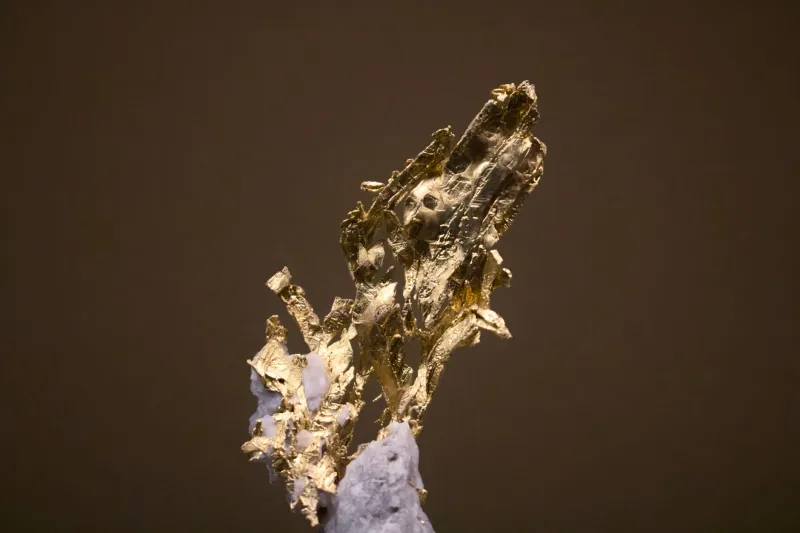
There's a certain irony in the fact that the device you're probably reading this on contains elements that, for most of scientific history, were considered little more than curiosities. Gallium, for instance, was famously used to play pranks — it melts just above room temperature, so early chemists loved crafting gallium spoons that dissolved dramatically in a hot cup of tea. Ha ha. Very funny. Nobody imagined it would one day be essential to LEDs, solar panels, and the semiconductors powering your phone.
That's kind of the magic of chemistry, though. Elements don't change. What changes is us — our technology, our needs, our ability to actually do something useful with what nature handed us. The periodic table has always had everything we need. We just had to figure out how to ask the right questions.
Gallium: The Prank Element That Got the Last Laugh
When Dmitri Mendeleev predicted gallium's existence in 1871 — before it was even discovered — he called it "eka-aluminum" and left a blank on his table for it. Paul Emile Lecoq de Boisbaudran found it in 1875, and for about a century, the world collectively shrugged. Sure, it's neat. It melts in your hand. Cool party trick.
Then solid-state electronics came along, and suddenly gallium's quirky semiconductor properties weren't just neat — they were necessary. Gallium arsenide and gallium nitride became the backbone of LEDs, laser diodes, and high-frequency transistors. That little blue-white glow from your phone screen? Gallium helped make that happen. The solar panels on rooftops across California and Texas? Gallium's fingerprints are all over those too. From prank spoon to cornerstone of the clean energy revolution — not bad for a metal that barely registers on most people's radar.
Lithium: From Psychiatric Medicine to the Battery That Runs the World
Lithium had a fascinating but narrow identity for most of the 20th century. Doctors used lithium salts to treat bipolar disorder, and that was largely the extent of the public conversation. It was a mental health medication. Important, certainly, but hardly the stuff of industrial gold rushes.
Then came the rechargeable lithium-ion battery, commercialized in the early 1990s, and the element's entire biography got rewritten overnight. Today, lithium is the beating heart of the electric vehicle revolution. Every Tesla, every Chevy Bolt, every e-bike humming down a city street runs on lithium. Demand has exploded so dramatically that geopolitics around lithium mining in places like Chile, Bolivia, and Australia now carry real global weight. The so-called "Lithium Triangle" in South America — where Bolivia, Chile, and Argentina converge — holds more than half the world's known lithium reserves, and nations are paying very close attention.
A soft, silvery metal that reacts violently with water went from niche pharmaceutical to the subject of international trade negotiations. That's quite a character arc.
The Rare Earths: An Entire Crew of Late Bloomers
If gallium and lithium are the headliners of this comeback story, the rare earth elements are the ensemble cast — a group of 17 metals with names like neodymium, dysprosium, and ytterbium that sound like they were invented for a sci-fi novel.
For most of their known history, rare earths were chemical curiosities. They're notoriously difficult to separate from each other, they occur in similar geological contexts, and for a long time, nobody had a pressing reason to do the hard work of isolating them in bulk. Then modern technology came along and changed the math entirely.
Neodymium is now essential to the powerful permanent magnets in wind turbines and electric motors. Europium and terbium create the vivid reds and greens in LED displays. Lanthanum helps refine petroleum and shows up in camera lenses. Cerium is used in catalytic converters — the device that keeps your car's exhaust from being even more toxic than it already is.
The geopolitical twist? China currently controls roughly 60% of the world's rare earth production and an even larger share of processing capacity. When China briefly restricted rare earth exports to Japan in 2010 during a territorial dispute, it sent shockwaves through global manufacturing. Suddenly, a group of elements most Americans couldn't name became a matter of national security conversation in Washington.
What Changed? It Wasn't the Elements
Here's the thing worth sitting with: gallium didn't evolve. Lithium didn't suddenly develop new properties. The rare earths were always rare earths. What shifted was human ingenuity — our ability to miniaturize electronics, to engineer batteries with higher energy density, to design motors that require the specific magnetic properties only certain elements can provide.
There's also a feedback loop between discovery and demand. Once engineers realized what these elements could do, investment in mining, refining, and processing infrastructure followed. That infrastructure made the elements cheaper and more available, which made them practical for consumer products, which created more demand, which drove more investment. Lithium-ion batteries cost about 97% less today than they did when they first hit the market in 1991.
The Next Comeback?
So which elements are currently sitting in their wallflower corner, waiting for their moment? Tellurium, used in some thin-film solar cells, remains scarce and underexplored. Indium plays a role in touchscreens but is almost entirely recovered as a byproduct of zinc mining — a fragile supply chain for something so important. Scandium, long a minor player, is showing up in aerospace aluminum alloys and solid oxide fuel cells.
The periodic table is 118 elements deep. We've figured out compelling uses for most of them, but the story isn't over. Every generation of technology rewrites the value rankings. The element that seems irrelevant today might be the lithium of 2045.
That's what makes chemistry endlessly interesting. The answers were always on the table — literally. We just keep getting better at reading them.