You Are a Graveyard of Dead Stars — And That's the Most Beautiful Thing About You
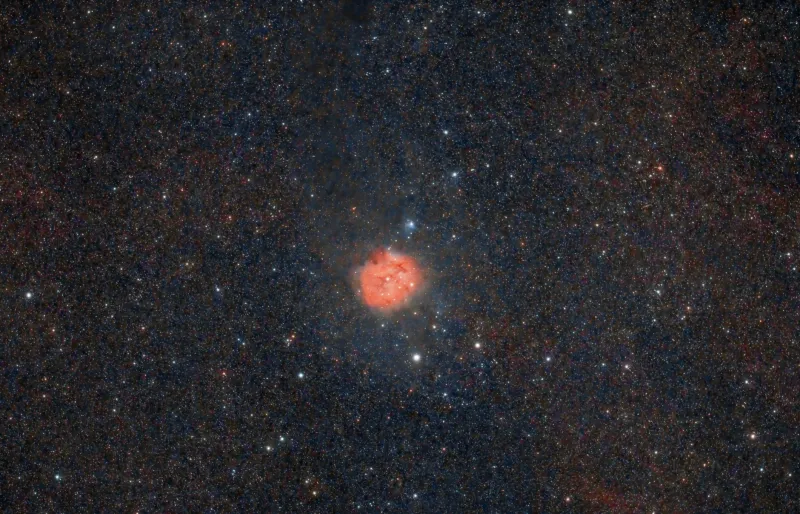
Here's a thought experiment: imagine tracing a single calcium atom in your femur — the big bone in your thigh — backward through time. Not metaphorically. Literally backward, like rewinding a cosmic film. That atom was in your body for decades. Before that, it was in the food you ate. Before that, it was in soil. Before that, it cycled through the oceans, through rock, through other living things. Keep going back — way, way back — and you eventually arrive at a moment about 5 to 6 billion years ago, inside a star that no longer exists, in the final catastrophic seconds of its life.
That star exploded. The calcium it had spent millions of years building in its core got blasted outward into space. Billions of years of drifting, coalescing, and planet-forming later, that atom ended up in your leg.
You are not just connected to the universe. You are made of it.
The Universe Started With Almost Nothing Useful
To appreciate how remarkable your atomic composition is, you have to start at the beginning — and the beginning was, chemically speaking, kind of boring.
The Big Bang, roughly 13.8 billion years ago, produced almost exclusively hydrogen and helium, with trace amounts of lithium. That's it. The entire periodic table — all 118 elements, the full dazzling array of chemistry that makes biology, geology, technology, and pizza possible — did not exist yet. The universe was a vast, hot, expanding sea of the two simplest elements.
Everything heavier than lithium had to be built. And the only furnaces powerful enough to build them were stars.
Stars Are Element Factories
A star is essentially a sustained nuclear fusion reaction. In its core, hydrogen atoms fuse together under enormous pressure and heat to form helium, releasing energy in the process. That energy is what makes stars shine. But fusion doesn't stop at helium.
As a star ages and its hydrogen supply dwindles, it begins fusing helium into carbon. Carbon fuses into oxygen. Oxygen into neon, then magnesium, then silicon. In the most massive stars — the real heavyweights of the cosmos — this process continues all the way up to iron. Each step up the periodic table requires more heat, more pressure, and produces less energy. Iron is the end of the line: it takes more energy to fuse iron than fusion releases, so the process stops.
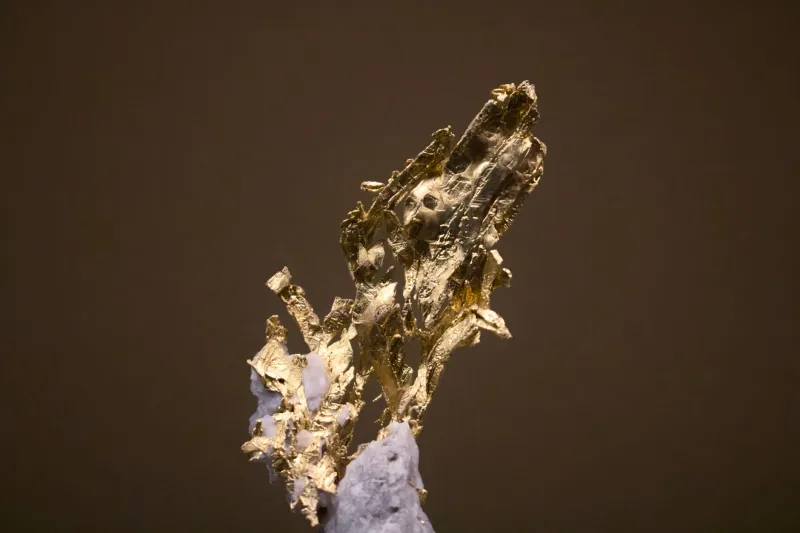
When a massive star's core turns to iron, the whole thing collapses catastrophically and then rebounds in a supernova — one of the most violent events in the universe. That explosion is so energetic that it can forge elements heavier than iron: copper, zinc, silver, gold, uranium. All of it gets scattered into space.
The carbon in every DNA molecule in your body was built in a star's core. The oxygen you're breathing was forged in stellar fusion. The iron in your blood — literally the iron that carries oxygen to your cells — was made in a star that exploded before our Sun was born.
Your Personal Elemental Inventory
The human body is about 60% water, which means oxygen and hydrogen dominate the count. By mass, you're roughly 65% oxygen, 18% carbon, 10% hydrogen, and 3% nitrogen — those four elements alone account for about 96% of you. But the supporting cast is fascinating.
Calcium (about 1.5% of your body mass) builds your bones and teeth and is critical for muscle contraction — including the heartbeat happening in your chest right now. It was mostly forged in supernovae. Phosphorus, another bone builder and the backbone of DNA and ATP (your cells' energy currency), also comes from stellar explosions. The iron in hemoglobin — about 4 grams of it in your blood — was cooked in the cores of massive stars.
Then there are the trace elements: iodine in your thyroid, zinc in your immune system, selenium acting as an antioxidant, cobalt at the center of vitamin B12. Tiny amounts, enormous biological consequences, all with cosmic origins.
Even the hydrogen in your body — the most abundant element by atom count — is ancient beyond reckoning. Hydrogen atoms from the Big Bang are still around. Some of them are probably in you right now, having traveled 13.8 billion years through the expanding universe to end up in a water molecule in your cells.
The Recycling Program That Made You
Here's where it gets even more mind-bending: the atoms in your body have been through all of this before. Many times.
Atoms don't wear out. They cycle. The carbon in your body has almost certainly been in other living things — maybe many other living things. It's been in dinosaurs, in ancient ferns, in bacteria, in ocean sediments. The water molecules in your cells have evaporated, rained down, flowed through rivers, and been drunk by countless organisms over billions of years.
Neil deGrasse Tyson once pointed out that the atoms in your left hand probably came from a different star than the atoms in your right hand. The universe isn't just the backdrop to your life — it's the raw material of it. You are a temporary, beautifully organized arrangement of atoms that the cosmos has been shuffling around for billions of years.
Why This Should Actually Change How You Feel Right Now
It's easy to hear "you're made of stardust" and have it bounce off as a pleasant abstraction. But try to feel the actual weight of it.
The supernova that made the calcium in your bones released more energy in seconds than the Sun will produce in its entire 10-billion-year lifetime. The carbon atoms in your DNA were built under pressures and temperatures we can barely simulate in a laboratory. The iron keeping you alive right now was forged in a stellar core and then scattered across light-years of space before gravity slowly gathered it back together into a solar system, a planet, an ocean, a living cell, a body.
You didn't come from the Earth, exactly. The Earth and you both came from the same scattered remnants of ancient stellar explosions. You're cousins, not creator and creation.
The periodic table isn't just a chart on a classroom wall. It's a map of where you came from. Every element on it has a story, and your story is written in all of them.
Next time someone asks what you're made of, the technically correct answer is: the ashes of stars that died before the Sun existed. You're welcome to use that at parties.