The Atomic Art Show: What's Really Making Your World So Colorful
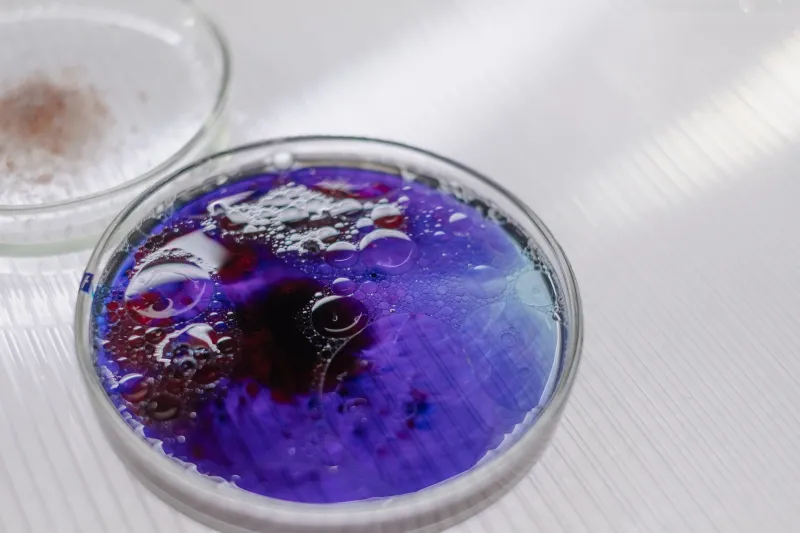
Pick up anything near you right now and look at its color. Really look at it. That hue didn't just happen. Somewhere in the history of that object, a chemist — or more likely, many chemists across many centuries — figured out how to manipulate atoms in a way that causes specific wavelengths of light to bounce into your eyeballs while others get absorbed. Color is not decoration. Color is physics. Color is chemistry. And the stories behind some of our most beloved pigments are genuinely wild.
Why Anything Has Color at All
Light from the sun contains every visible color — the whole rainbow, packed together into white light. When that light hits an object, the atoms and molecules in that object absorb some wavelengths and reflect others. The wavelengths that bounce back into your eyes are what you perceive as color.
The specific wavelengths a material absorbs depend on its atomic structure — particularly how electrons are arranged and how much energy they need to jump between energy levels. Mess with the atomic structure, and you change the color. This is why chemistry gives us such precise control over pigments: swap out one element, tweak a molecular bond, and you can shift a color from orange to red to deep purple.
Transition metals — the big middle block of the periodic table — are especially good at absorbing visible light, which is why so many vivid pigments are built around elements like chromium, cobalt, copper, and iron.
The Blues That Broke Banks (and Sometimes People)
For most of human history, blue was the hardest color to come by. The ancient Egyptians actually invented the world's first synthetic pigment — Egyptian blue, a calcium copper silicate — around 2500 BCE. They ground it up, mixed it with egg or oil, and used it to paint everything from tomb walls to pottery. It worked beautifully. Then the knowledge of how to make it was essentially lost for centuries.
In medieval Europe, the go-to blue was ultramarine, made by grinding up lapis lazuli, a semi-precious stone mined almost exclusively in what is now Afghanistan. The name literally means "beyond the sea," because it had to be shipped so far to reach European artists. It was more expensive than gold by weight. Painters reserved it for the most sacred subjects — the Virgin Mary's robes, the sky in depictions of heaven. Using ultramarine was a statement of serious financial commitment.
Then in 1704, a German chemist accidentally stumbled onto Prussian blue while trying to make a red pigment. (A contaminated batch of potash. Chemistry accidents have a surprisingly good track record.) Prussian blue — an iron cyanide compound — was the first modern synthetic pigment, and it democratized blue overnight. Suddenly anyone could afford blue. Hokusai used it in "The Great Wave." Van Gogh used it extensively. Your blueprint paper, if you've ever seen one, gets its name from the cyanotype process that also uses iron chemistry.
The story didn't stop there. In 2009, a chemist at Oregon State University accidentally created a brand-new blue pigment — YInMn blue, made from yttrium, indium, and manganese — while researching electronics materials. It's now commercially available, and it's one of the most stable, non-toxic blues ever made. The periodic table had another color hiding in it all along.
When Pretty Pigments Went Very Wrong
Not every color discovery has a happy ending. Some of history's most beautiful pigments were also quietly lethal.
Paris green — a vivid emerald color made from copper acetoarsenite — was enormously popular in 19th-century wallpaper, fabric dye, and paint. It was everywhere in Victorian homes. The problem? In damp conditions, certain molds could convert the arsenic in the pigment into a toxic gas. There's a credible theory that Napoleon Bonaparte's slow death on the island of Saint Helena was partly caused by arsenic poisoning from the Paris green wallpaper in his damp residence. His hair samples, analyzed centuries later, showed elevated arsenic levels.
Lead white, used in paint for literally thousands of years, was another beautiful disaster. It gave oil paintings a luminous, creamy quality that other whites couldn't match. It also caused painters — who sometimes mixed it with their fingers or held brushes in their mouths — serious neurological damage over time. The same lead pigments showed up in cosmetics, dishes, and house paint well into the 20th century.
Chrome yellow, made from lead chromate, gave Van Gogh's sunflowers their brilliant golden glow. Modern analysis of his paintings shows that the chrome yellow has darkened significantly over time due to chemical reactions — meaning some of the most famous yellow paintings in history are no longer quite the color their creator intended.
Modern Pigment Engineering: Designing Color From Scratch
Today, chemists don't wait around for accidents or trade routes. Pigment design is a deliberate, atomic-level engineering discipline. By tweaking the molecular structure of organic dye molecules or adjusting the ratios of metal oxides in inorganic pigments, chemists can dial in almost any color imaginable.
Titanium dioxide — a compound of titanium and oxygen — replaced lead white in the 20th century and is now the most widely used white pigment on Earth. It's in your wall paint, your sunscreen, your white chocolate coating, and the bright white of printer paper. Titanium is incredibly good at scattering visible light, which is what makes white things look white.
The vivid reds in modern lipstick often come from carmine (made from crushed cochineal insects — yes, really) or from synthetic azo dyes built from nitrogen-containing organic compounds. The electric blue on a Subaru or the deep metallic red on a Ford F-150? Those automotive paints layer multiple pigment types with aluminum flakes and clear coats in a way that changes color depending on viewing angle — a phenomenon called goniochromism.
Color Is Never Just Color
Every time you look at a color — really look at it — you're seeing the result of electrons absorbing and releasing energy, of atomic structures interacting with light, of centuries of human curiosity and occasionally dangerous experimentation. The blue in your jeans has a history. The red in your ketchup bottle has a chemistry. Even the slightly-off-white of your phone's screen involves carefully engineered phosphors and rare earth elements doing precise quantum mechanical work.
The world is colorful because the periodic table is generous. And because humans, for all our faults, have never stopped being obsessed with making things beautiful.