The Trace Element That's Quietly Keeping Your Liver Out of Trouble
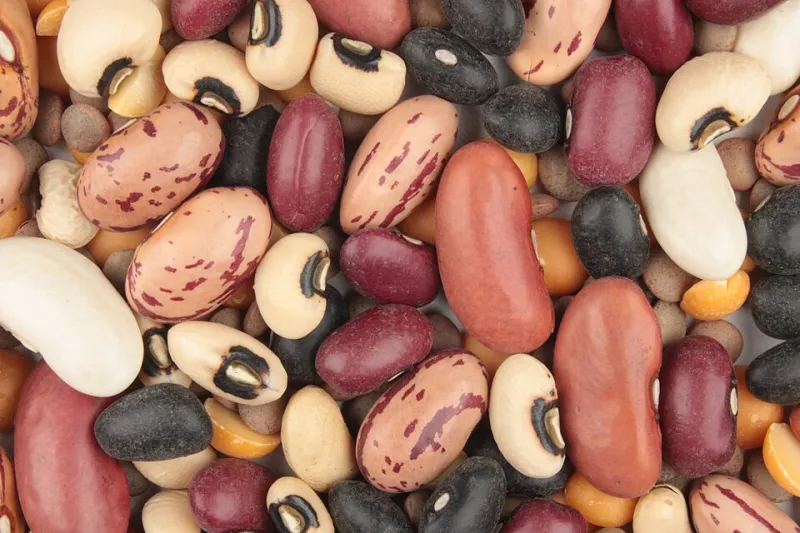
Photo: Bean appreciator, CC0, via Wikimedia Commons
Nutritional science has a celebrity problem. Iron gets magazine covers. Zinc gets cold remedy commercials. Vitamin D gets its own TED Talk ecosystem. Meanwhile, molybdenum is sitting in the back of the classroom, doing genuinely heroic work, and nobody even knows how to pronounce it.
(It's muh-LIB-duh-num, by the way. From the Greek molybdos, meaning lead, because early mineralogists confused its ore with lead ore. Even its name got a case of mistaken identity.)
Molybdenum is element 42 on the periodic table — right in the middle of the transition metals, which is not exactly prime real estate for public attention. You need it in tiny amounts: the recommended daily intake for adults in the US is just 45 micrograms. That's micrograms. You could fit your entire daily requirement on the period at the end of this sentence and have room left over.
But don't let the small number fool you. Molybdenum is one of those elements where the dose is almost irrelevant — what matters is the function. And the functions it performs are not optional.
The Three Enzymes That Can't Work Without It
Your body uses molybdenum almost exclusively as a cofactor — a non-protein component that enzymes need to do their jobs. Think of it like a specialized tool that certain molecular machines can't operate without. Molybdenum slots into three enzymes in particular, and each one is doing something genuinely important.
Sulfite oxidase is the one that should get molybdenum some serious name recognition. Sulfites occur naturally in your body as a byproduct of metabolizing sulfur-containing amino acids — the building blocks of proteins. They also show up in food, particularly in wine, dried fruits, and processed foods (you've seen "contains sulfites" on labels). Sulfite oxidase converts sulfites into sulfates, which are harmless and easily excreted. Without molybdenum, sulfite oxidase can't function. Without functioning sulfite oxidase, sulfites accumulate. And accumulated sulfites are neurotoxic. Severe molybdenum deficiency — extremely rare, but documented — causes neurological damage that looks a lot like severe brain injury.
Xanthine oxidase handles the breakdown of purines, which are nitrogen-containing compounds found in DNA. When cells die and their DNA gets recycled, purines need to be broken down into uric acid, which gets filtered out by the kidneys. Xanthine oxidase does that conversion. It also plays a role in producing reactive oxygen species that your immune system uses to kill pathogens — so it's moonlighting as part of your defense system while also doing metabolic cleanup.
Aldehyde oxidase is the enzyme that processes certain drugs and foreign compounds in your liver, converting them into forms your body can excrete. It's part of your liver's broader detoxification machinery. Some medications are actually metabolized by aldehyde oxidase, which is why researchers studying drug metabolism have to account for individual variation in molybdenum-dependent enzyme activity.
Three enzymes. Three critical functions. One obscure element.
Where You're Already Getting It
Here's the good news: unless something has gone seriously wrong with your diet or your health, you're almost certainly getting enough molybdenum. It's widely distributed in the food supply, and unlike some nutrients, it's reasonably well-absorbed.
Legumes are the standout source — lentils, black beans, kidney beans, and chickpeas are all solid options. If you've been eating a bean burrito at Chipotle and feeling good about it, you can now add "molybdenum intake" to your list of reasons. Whole grains, nuts, and leafy vegetables also contribute. Even dairy and organ meats contain meaningful amounts.
The soil content of molybdenum varies by region, which affects how much ends up in plant foods — but in the US, where food comes from geographically diverse sources and many processed foods contain legume-derived ingredients, deficiency is genuinely rare in healthy adults.
When Things Go Wrong
So rare that true molybdenum deficiency has only been clinically documented in a handful of cases. One involved a patient on long-term total parenteral nutrition — intravenous feeding — where the formula lacked molybdenum. That patient developed symptoms including rapid heart rate, night blindness, and neurological problems that resolved when molybdenum was added to the formula.
There's also a genetic condition called molybdenum cofactor deficiency, where the body can't properly build the cofactor that attaches molybdenum to enzymes. This is a severe, usually fatal condition in infants — not because they lack dietary molybdenum, but because their cells can't use it. It's extraordinarily rare, affecting perhaps one in 100,000 births, and researchers are actively working on enzyme replacement therapies.
At the other end of the spectrum, very high molybdenum intake (far above what you'd get from food — we're talking industrial exposure or extreme supplementation) can interfere with copper metabolism. Molybdenum and copper compete in a way that can cause copper deficiency symptoms if molybdenum is absurdly elevated. But you'd have to work pretty hard to get there through diet alone.
Why It Doesn't Get More Attention
Honestly? Because deficiency is rare and the symptoms, when they do occur, are hard to attribute without specialized testing. Nutritional research tends to chase problems — and molybdenum deficiency isn't a widespread public health crisis in the US the way iron deficiency anemia or vitamin D insufficiency are.
There's also the branding problem. "Molybdenum" does not roll off the tongue. It doesn't have the reassuring familiarity of calcium or the cultural cachet of omega-3s. You can't put it on a smoothie label and expect people to get excited. The element is stuck with a name that sounds like something a geologist would say at a party to clear the room.
But here at Unununium, we have a soft spot for the periodic table's overlooked players. Element 42 doesn't need a rebrand — it needs a little recognition for the unglamorous, essential work it's been doing in your liver and brain without ever asking for credit.
The Bigger Picture
Molybdenum is also a reminder that nutrition is way more complicated than the headlines suggest. The nutrients that get attention are often the ones that are easiest to market or the ones associated with diseases common enough to generate research funding. The ones quietly keeping your enzyme systems running? They tend to stay quiet.
Your body is running on a staggeringly complex mix of elements — some in grams, some in milligrams, some in amounts so small they're measured in micrograms. Molybdenum sits at the extreme end of that scale, needed in vanishingly tiny quantities, but woven into processes your cells absolutely cannot skip.
So eat your lentils. Not just for the protein or the fiber or the iron (though those are great reasons too). Eat them because somewhere in your liver, a molybdenum-dependent enzyme is doing a job that doesn't have a hashtag but absolutely deserves one.