The Rule Everyone Knew Was True — Until a Guy With a Heat Gun Broke It
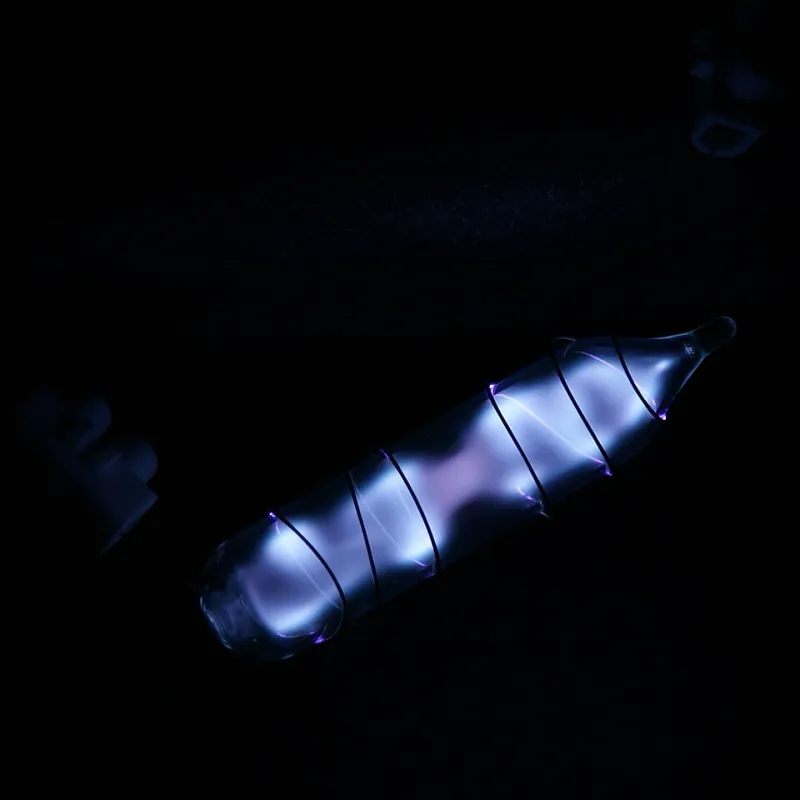
Photo: Hi-Res Images of Chemical Elements, CC BY 3.0, via Wikimedia Commons
Every chemistry class teaches it, and every student absorbs it: the far-right column of the periodic table is full of snobs. Helium, neon, argon, krypton, xenon, radon — the noble gases. Full outer shells of electrons. Nothing to gain, nothing to give. They don't react. They don't bond. Don't even bother asking.
For most of the 20th century, that wasn't just a rule — it was the rule, presented as settled science in every textbook on Earth. Which makes what happened in a Canadian lab in 1962 one of the most satisfying plot twists in the history of chemistry.
Where the Rule Came From
The inertness idea wasn't dumb. It was actually a triumph of the electron-shell theory of the atom. Noble gases have their outermost electron shells completely filled, and since all of chemistry is basically atoms shuffling electrons around to reach that filled-shell state, a gas that already has one has no motivation to do anything. It's the chemical equivalent of a person who already has a parking spot, a full tank of gas, and nowhere to be.
The evidence seemed overwhelming. Chemists had thrown acids, oxidizers, and everything else at these gases for decades and gotten nothing but shrug emoji at the molecular level. Early experimenters like Henri Moissan did get hints of reactivity under extreme conditions, but the results were murky, and the tidy story of inertness was too elegant to give up. So the exceptions got swept under the rug, and "inert" became gospel.
Science does this sometimes. A rule works so well for so long that it stops being a rule and becomes a law of nature — until someone with nothing to lose points out the rug is getting lumpy.
Enter Neil Bartlett, Who Didn't Get the Memo
Neil Bartlett wasn't trying to make history. He was a 29-year-old inorganic chemist at the University of British Columbia studying platinum compounds — specifically, a ferocious oxidizer called platinum hexafluoride, PtF₆.
In early 1962, Bartlett noticed something wild: PtF₆ was strong enough to rip electrons away from oxygen gas, one of the most stubborn molecules around. Then came the leap that separates good chemists from great ones. He looked at the ionization energy of xenon and realized it was almost identical to oxygen's. If PtF₆ could oxidize oxygen, why not xenon?
His colleagues, by his own account, thought he was nuts. The idea of a noble gas compound was, to most of the field, on par with cold fusion.
In March 1962, Bartlett mixed deep-red platinum hexafluoride vapor with pale xenon gas in a glass vessel at room temperature. The red vapor vanished. Orange-yellow crystals formed on the walls. Xenon — the smug, unreactible, textbook-certified loner — had just been bonded. The compound we now write as XePtF₆ didn't exist in any textbook on Earth that morning, and by that afternoon, it existed in every lab conversation in the world.
The chemistry community's reaction was somewhere between shock and a stampede. Within months, labs worldwide had synthesized xenon fluorides and oxides. Chemists had spent sixty years proving a negative — and the negative wasn't even true.
Why This Still Matters
Bartlett's experiment did more than add a few weird compounds to the catalog. It recalibrated how we think about the periodic table itself. The octet rule is a fantastic guideline, but reality is messier and more interesting — fluorine's hunger for electrons, for instance, is strong enough to bully even the "noble" elements into cooperation.
And the compounds aren't just party tricks. Xenon fluorides are used as etching agents in semiconductor manufacturing. Xenon itself, inert as ever in the body, turns out to be a remarkable anesthetic and neuroprotective agent. The loners ended up with jobs after all.
The Takeaway
The noble gases taught chemistry two contradictory lessons, and both are worth keeping. First: rules based on solid theory are usually right. Second: "usually right" is not "always right," and the gap between the two is where discoveries live.
Bartlett didn't have a heat gun, a superweapon, or even particularly exotic equipment — just a glass vessel, two gases, and the willingness to test something everyone knew was impossible. Sixty years of textbooks fell to an afternoon experiment.
So the next time someone tells you something in science is settled? That's not the end of the story. That's usually the setup.