Two Miles Down and Full of Treasure: The Science of What's Hiding on the Ocean Floor
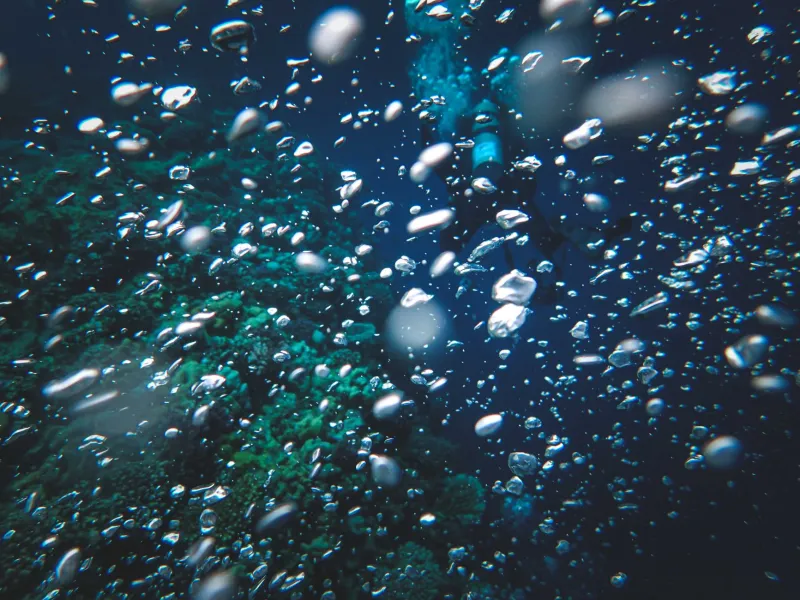
Picture the floor of the Pacific Ocean, somewhere between Hawaii and Mexico. It's dark — completely, absolutely dark. The pressure is crushing. The temperature hovers just above freezing. And spread across the sediment, as far as any camera has illuminated, are millions upon millions of lumpy, potato-shaped rocks.
Those rocks are called polymetallic nodules, and they are one of the most chemically interesting objects on Earth. They're also sitting at the center of a debate that mixes cutting-edge materials science, environmental ethics, and old-fashioned resource competition into something genuinely complicated.
Welcome to the new frontier of elemental extraction. It's wet, it's deep, and it's very, very far down.
What Are These Things, Exactly?
Polymetallic nodules form over millions of years — and that is not hyperbole. Some of them grow at a rate of about a centimeter every million years, accumulating layer by layer as dissolved metals in seawater precipitate around a tiny nucleus, often a shark tooth or a fragment of shell. They're essentially geological time capsules, recording the chemistry of ancient oceans in their concentric rings.
What they contain is what makes them interesting to basically everyone right now. A typical nodule from the Clarion-Clipperton Zone — a vast abyssal plain in the central Pacific that spans an area larger than the continental United States — contains significant concentrations of manganese, nickel, cobalt, and copper. But those are just the headliners. Nodules also carry lithium, molybdenum, tellurium, yttrium, and a suite of rare earth elements that read like a shopping list for modern technology.
Tellurium, in particular, is worth pausing on. It's a metalloid used in thin-film solar panels, and it's genuinely scarce on land. Some estimates suggest the nodule fields of the Pacific contain more tellurium than all known terrestrial reserves combined. That's not a small thing when the world is trying to build a solar-powered grid.
The Ocean Isn't Just Hiding Rocks
Nodules get most of the press, but the deep ocean is harboring other elemental surprises.
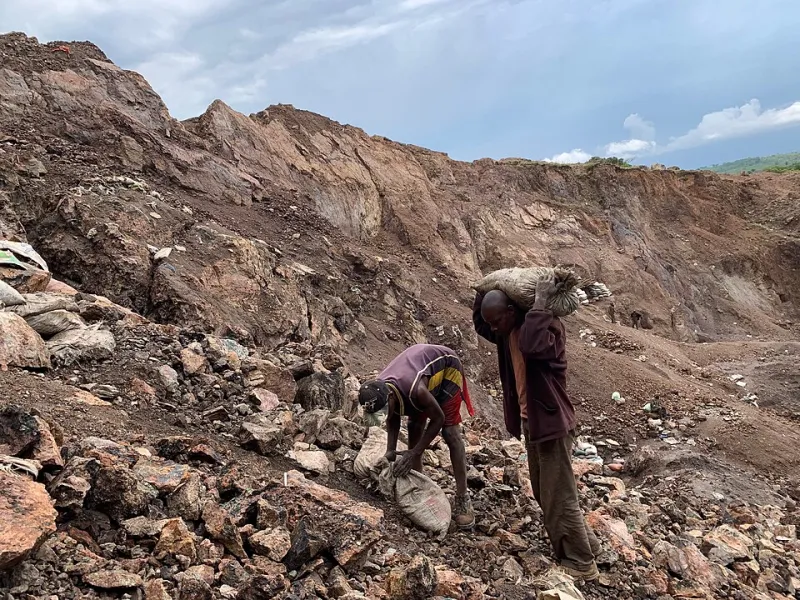
Cobalt-rich crusts form on the flanks of underwater volcanoes and seamounts, where oxygen-rich water flows over volcanic rock. These crusts can be several centimeters thick and are particularly enriched in cobalt — the same cobalt that's essential for lithium-ion battery cathodes, the same cobalt that currently comes largely from mines in the Democratic Republic of Congo under conditions that have attracted significant human rights scrutiny. The idea of an alternative cobalt source has obvious appeal.
Seafloor massive sulfides are a different beast entirely. These form at hydrothermal vents — the famous "black smokers" where superheated, mineral-laden water blasts out of the seafloor. As that water hits cold seawater, metals precipitate and pile up into chimney-like structures rich in copper, zinc, lead, gold, and silver. They're essentially ore deposits created by the planet's own plumbing system.
And then there's the water itself. Seawater contains dissolved traces of nearly every element on the periodic table — including uranium, lithium, and various rare earths. The concentrations are tiny, but the volume of the ocean is almost incomprehensibly large. Researchers are actively developing membranes and sorbent materials that could extract uranium from seawater at scale, potentially providing a nearly limitless fuel source for nuclear reactors without any new terrestrial mining.
Why Now? Why This Urgency?
The honest answer is: the energy transition.
Electric vehicles, wind turbines, solar panels, and grid-scale battery storage all require elements that are currently in tight supply. Cobalt, nickel, manganese, lithium, rare earths — the periodic table of the clean energy economy overlaps almost perfectly with the periodic table of the deep ocean floor. As demand for these materials climbs, the pressure to find new sources intensifies.
The International Seabed Authority (ISA), a UN body, has issued dozens of exploration licenses covering millions of square kilometers of international seabed. Companies from multiple countries — including US-affiliated operations — have been surveying, sampling, and developing mining technology for years. The question of when commercial extraction begins has shifted from "if" to "when" in most serious industry discussions.
The Environmental Equation Is Genuinely Hard
Here's where the story gets uncomfortable, because the science of what lives in the deep ocean is lagging badly behind the economics of mining it.
The abyssal seafloor, despite being cold and dark and pressurized beyond anything humans can survive unaided, is not lifeless. It's home to unique ecosystems built around slow, patient organisms that have adapted to extraordinary stability. Nodule fields in the Clarion-Clipperton Zone host species found nowhere else on Earth — sponges, sea cucumbers, polychaete worms, and microbial communities that live in and on the nodules themselves.
When a mining collector vehicle scrapes across the seafloor to vacuum up nodules, it doesn't just remove the nodules. It disturbs sediment, creates plumes that can travel hundreds of kilometers, and destroys habitat that took millions of years to develop. A 1989 experimental mining disturbance in the Pacific was revisited by researchers in 2015 — 26 years later, the tracks were still clearly visible, and community recovery was minimal.
The carbon implications are also poorly understood. Deep-sea sediments store significant amounts of organic carbon. Disturbing them could release carbon into the water column, potentially affecting ocean chemistry in ways we don't yet have good models for.
Scientists are pushing hard for more baseline ecological data before commercial mining begins. The argument is straightforward: you can't assess damage to a system you don't understand.
Chemistry as the Mediator
Interestingly, chemistry itself might offer some middle ground between "mine everything" and "mine nothing."
Researchers are developing more selective extraction techniques — processes that can target specific elements from seawater or nodule leachates without the brute-force physical disruption of mechanical seafloor mining. Electrochemical extraction methods, bio-inspired sorbent materials, and engineered microorganisms are all being explored as lower-impact alternatives to conventional approaches.
There's also serious investment in making better use of what we already mine on land — improving recycling rates for cobalt, nickel, and rare earths from end-of-life electronics, reducing demand for virgin material in the first place. If a phone battery's cobalt can be recovered and reused five times instead of once, the pressure on new extraction sources — including the ocean floor — drops accordingly.
The deep ocean represents something rare in the modern world: a genuine unknown. We've mapped more of the Moon's surface than the seafloor. The chemistry down there is extraordinary — millions of years of geological patience, expressed in lumpy rocks that contain the building blocks of the technology we're betting our future on.
What we do with that knowledge says a lot about the kind of species we're choosing to be. The elements are there. The question is whether we're patient enough to understand what we'd be taking them from.